
Understanding your menstrual cycle is essential for reproductive health, family planning, and overall well-being. A period calculator helps you predict when your next period will arrive, identify your fertile window, and monitor cycle patterns over time. Whether you’re trying to conceive, avoid pregnancy, or simply stay prepared, tracking your menstrual cycle provides valuable insights into your body’s natural rhythm.
In this comprehensive guide, we’ll explore how to use a period calculator effectively, understand menstrual cycle phases, and leverage tools like an ovulation calculator to take control of your reproductive health.
What Is a Period Calculator and How Does It Work?
A period calculator is a digital tool that predicts your next menstrual period based on your previous cycle data. By entering the first day of your last period and your average cycle length, the calculator estimates when your next period will begin.
Key Data Points for Accurate Period Tracking
To get the most accurate predictions from a menstrual cycle calculator, you’ll need:
- First day of your last period: This marks day one of your cycle
- Average cycle length: The number of days from the first day of one period to the first day of the next (typically 21-35 days)
- Period duration: How many days your bleeding typically lasts
A period tracker uses this information to create a personalized period calendar that shows your expected period dates, fertile window, and ovulation day.
Understanding Menstrual Cycle Phases
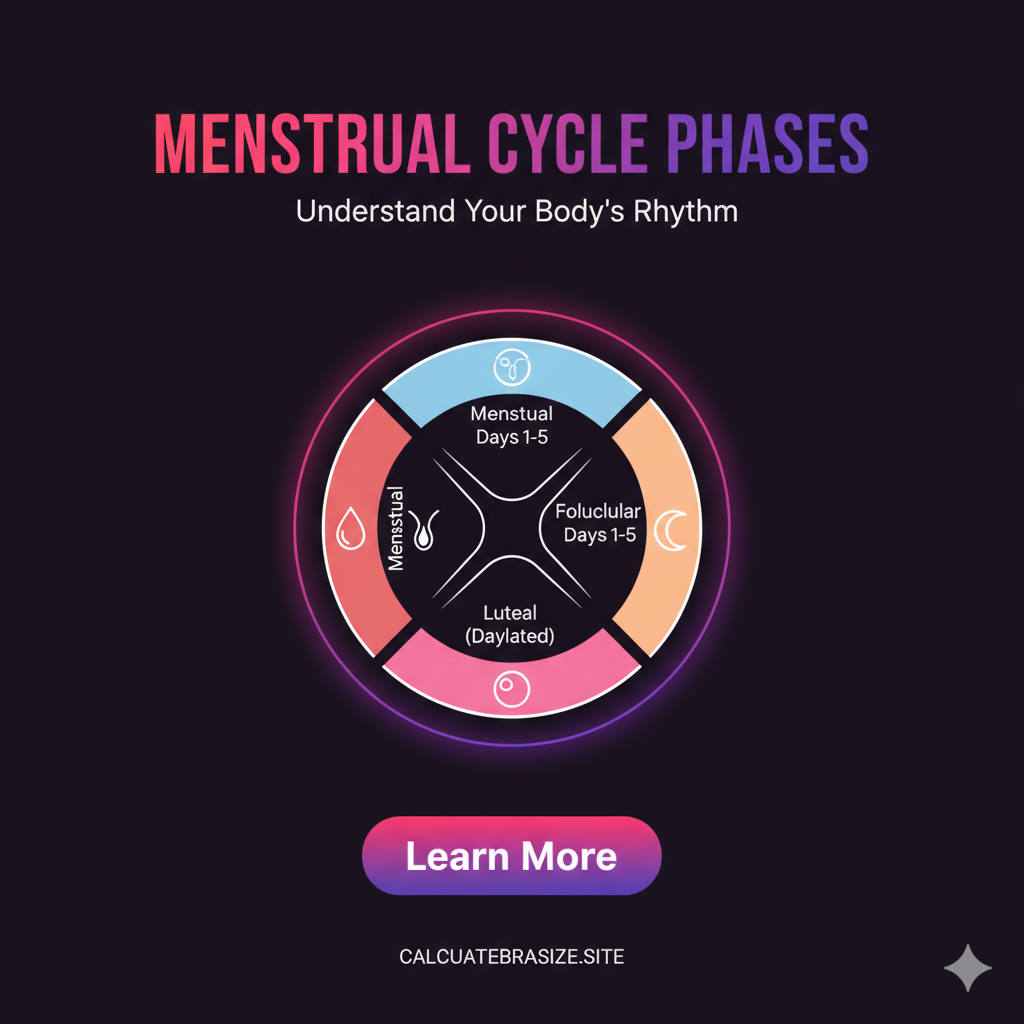
Your menstrual cycle consists of distinct hormonal phases that prepare your body for potential pregnancy each month. Understanding menstrual cycle phases helps you recognize what’s happening in your body and why symptoms vary throughout the month.
The Four Phases of Your Menstrual Cycle
1. Menstrual Phase (Days 1-5) This is when bleeding occurs. The normal period duration ranges from 3-7 days, with most women experiencing 3-5 days of flow.
2. Follicular Phase (Days 1-13) Overlapping with menstruation, this phase involves rising estrogen levels as your ovaries prepare to release an egg.
3. Ovulation Phase (Day 14) An ovulation calculator helps identify this crucial 24-hour window when your ovary releases a mature egg. This is your most fertile time.
4. Luteal Phase (Days 15-28) After ovulation, progesterone levels rise to prepare the uterine lining. If pregnancy doesn’t occur, hormone levels drop, triggering your next period.
A period cycle chart visualizes these phases, making it easier to understand your body’s patterns.
How to Calculate Your Period Cycle
Many women wonder how to calculate period cycle length accurately. Here’s a simple method:
Manual Period Cycle Calculation
- Mark the first day of your period (day 1)
- Count each day until the day before your next period starts
- The total number is your menstrual cycle length
- Track 3-6 cycles to find your average
Using a Menstrual Cycle Tracker
An online period tracker automates this process by:
- Storing your cycle history
- Calculating average cycle length
- Predicting future periodsPeriod Calculator vs. Ovulation Calculator: What’s the Difference?
- While often used together, these tools serve different purposes:
Period Calculator Functions - A period calculator focuses on:
- Predicting menstrual start dates
- Tracking cycle regularity
- Monitoring period symptoms
- Planning around your cycle
- Identifying patterns or irregularities
Ovulation Calculator Benefits
An ovulation calculator specifically identifies:
- Your fertile window (typically 5-6 days)
- Peak fertility days
- Best timing for conception
- Safe period calculator for natural family planning
Many comprehensive tools combine both features, allowing you to calculate ovulation and period dates simultaneously. This integration is particularly valuable for women using natural family planning methods or trying to conceive.
What Is a Normal Menstrual Cycle?
If you’ve wondered “what is a normal menstrual cycle?” – the answer varies more than you might think.
Normal Menstrual Cycle Length
Period length: 3-7 days of bleeding
Average cycle: 28 days (but anywhere from 21-35 days is normal)
Variation: Cycles can vary by 2-3 days month to month
How Many Days Between Periods Is Normal?
How many days between periods is normal depends on your individual cycle. While 28 days is average, regular cycles can range from 21-40 days. Consistency matters more than matching the “average” – if your cycle is consistently 25 days or 32 days, that’s normal for you.
Use a menstrual cycle tracker to identify your personal pattern and detect any significant changes.
Advanced Features Worth Considering
- Irregular period calculator for unpredictable cycles
- Late period calculator with pregnancy probability
- Medication and birth control tracking
- Partner sharing for family planning
- Health report exports for medical appointments
An accurate period calculator paired with comprehensive tracking creates a powerful menstrual cycle app that becomes more precise over time
How to Track Period Cycle for Irregular Cycles
Women with irregular cycles often ask how to track period cycle when predictions are unreliable. Here’s how:
Strategies for Irregular Cycle Tracking
- Track consistently: Even irregular patterns reveal information over time
- Log symptoms: Spotting, cramping, and cervical mucus changes provide clues
- Use an irregular period calculator: Specialized algorithms handle variability better
- Monitor additional factors: Stress, weight changes, and lifestyle factors
- Consult healthcare providers: Share your menstrual calculator data for better diagnosis
An irregular period calculator uses statistical modeling to provide probability ranges rather than exact dates, which is more helpful for unpredictable cycles.
How to Calculate Menstrual Cycle Length Accurately
Learning how to calculate menstrual cycle length properly ensures better predictions:
Step-by-Step Calculation
Calculate average: Add all cycle lengths and divide by the number of cycles
Identify Day 1: The first day of full menstrual flow (not spotting)
Count forward: Include every day until the day before your next period
Record the number: This is one complete cycle length
Repeat for 3-6 months: Track multiple cycles
Fertility Calculator: Understanding Your Fertile Window
A fertility calculator is essential for women trying to conceive or practicing natural family planning.
How Fertility Calculators Work
Your fertile window includes:
- 5 days before ovulation
- Ovulation day itself
- 1 day after ovulation
Sperm can survive up to 5 days in the female reproductive tract, making the days leading up to ovulation crucial for conception.
Safe Period Calculator for Natural Family Planning
A safe period calculator identifies days when pregnancy is least likely to occur. However, this method has limitations:
- Only effective with regular cycles
- Requires consistent tracking
- Has a typical use failure rate of 12-24%
- Not suitable for preventing sexually transmitted infections
For reliable contraception, consult healthcare providers about additional methods.
Using a Period Calendar for Better Planning
A period calendar offers practical benefits beyond health tracking:
Lifestyle Planning
- Schedule important events around your cycle
- Plan vacations when you won’t be menstruating
- Prepare for energy fluctuations
- Anticipate mood changes
Health Monitoring
- Detect changes in normal period duration
- Identify potential health issues early
- Track symptoms related to conditions like PCOS or endometriosis
- Provide accurate information to healthcare providers
Period Due Date Calculator: When to Expect Your Next Period - A period due date calculator answers the common question: “when is my next period?”
Factors Affecting Period Prediction Accuracy - Cycle regularity: Regular cycles = more accurate predictions
- Data history: More tracked cycles = better accuracy
- Recent changes: Stress, illness, or lifestyle changes can shift timing
- Age factors: Perimenopause causes increasing irregularity
- For women with consistent cycles, an accurate period calculator can predict within 1-2 days. Those with variable cycles should use a late period calculator that provides probability ranges.
Tips for Effective Period Tracking
Maximize the benefits of your menstrual cycle calculator with these strategies:
Best Practices
- Track from day one: Start with your next period for immediate benefits
- Log consistently: Daily entries improve accuracy
- Record symptoms: Track flow, cramps, mood, and energy levels
- Update cycle length: Adjust if you notice changes
- Review patterns: Check your period cycle chart monthly
- Share with healthcare providers: Export data for medical appointments
FAQs
Q: How accurate is a period calculator?
A: For women with regular cycles (varying by less than 3 days), a period calculator is typically accurate within 1-2 days. Accuracy improves with more tracked cycles. Irregular cycles reduce prediction accuracy.
Q: Can I use an ovulation calculator if I have irregular periods?
A: Yes, but predictions will be less reliable. Track ovulation signs like basal body temperature and cervical mucus alongside an ovulation calculator for better accuracy with irregular cycles.
Q: What is the average menstrual cycle length?
A: The average menstrual cycle is 28 days, but normal cycles range from 21-35 days. Your personal “normal” is what’s consistent for you, even if it differs from the average.
Q: How do I calculate when my next period is due?
A: Add your average cycle length to the first day of your last period. For example, if your cycle is 30 days and your last period started on the 1st, your next period should start around the 31st.
Q: Is a period tracker app better than a paper calendar?
A: Digital period trackers offer automated calculations, pattern recognition, symptom logging, and portability that paper calendars can’t match. They also become more accurate over time as they learn your patterns.
Q: What should I do if my period is late according to my calculator?
A: If your period is 5-7 days late and you’re sexually active, take a pregnancy test. If negative and your period hasn’t started after 2 weeks, consult a healthcare provider to rule out other causes.
Q: Can stress affect my period calculator predictions?
A: Yes. Stress can delay ovulation, which lengthens your cycle and makes predictions less accurate. Note stressful periods in your tracker to understand pattern changes.
Q: How many days of period bleeding is normal?
A: Normal period duration is 3-7 days, with most women bleeding for 3-5 days. Bleeding for less than 2 days or more than 7 days warrants discussion with a healthcare provider.