Introduction
For decades, the fitness and medical industries have placed a heavy emphasis on the bathroom scale. We have been conditioned to believe that our total body weight—and by extension, our Body Mass Index (BMI)—is the ultimate arbiter of our overall health. However, modern medical science has proven that this is a fundamentally flawed approach. It is not just about how much fat you have on your body; it is critically about where that fat is located. This paradigm shift has brought a much more accurate, revealing metric to the forefront of preventative medicine: the waist-to-hip ratio (WHR).
Understanding your ideal waist to hip ratio is one of the most powerful, immediate ways to assess your risk for chronic lifestyle diseases. Unlike stepping on a scale, which cannot differentiate between heavy muscle mass, water retention, and dangerous abdominal fat, your WHR tells a very specific story about your internal biology. It measures the proportion of fat stored around your waist (which surrounds your vital organs) compared to the fat stored around your hips and buttocks.
Why is this distinction so vital? Because fat is not completely uniform. The fat that sits underneath the skin on your thighs is biologically different from the fat that wraps tightly around your liver and pancreas. An unhealthy waist-to-hip ratio is a glaring warning sign for silent, metabolic issues like insulin resistance, type 2 diabetes, hypertension, and cardiovascular disease. Even if your BMI categorizes you as “normal weight,” a high WHR can quietly put you in a high-risk category—a phenomenon known in the medical community as “normal-weight obesity.”
In this comprehensive guide, we will break down exactly what the ideal waist to hip ratio is according to global health authorities like the World Health Organization (WHO). We will provide you with step-by-step instructions on how to measure yourself accurately at home, explain the profound biological differences between “apple” and “pear” body shapes, and dive deep into why this simple measurement might just save your life. Whether you are beginning a weight loss journey, optimizing your athletic performance, or simply trying to improve your long-term longevity, mastering your WHR is the critical first step.
What is the Waist-to-Hip Ratio (WHR)?
The Waist-to-Hip Ratio (WHR) is a simple anthropometric measurement used by doctors, nutritionists, and researchers to assess fat distribution across the human body. To put it simply, it looks at how much girth you carry around your midsection compared to how much girth you carry around your hips.
The Mathematical Definition
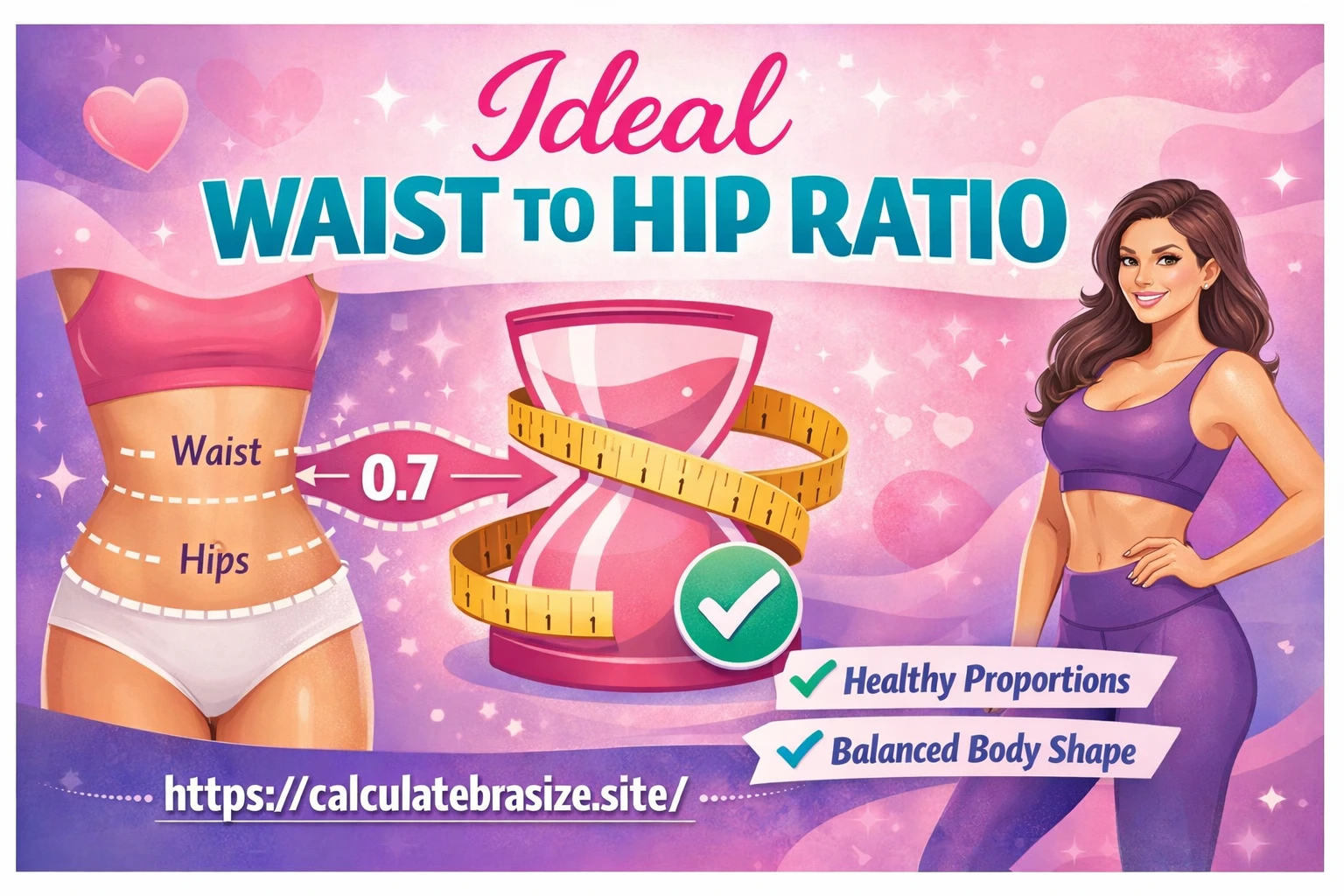
Mathematically, the WHR is exactly what it sounds like: it is the circumference of your waist divided by the circumference of your hips. The resulting decimal number gives you a ratio.
- Formula: WHR = (Waist Circumference) ÷ (Hip Circumference)
If your waist is smaller than your hips, your ratio will be less than 1.0. If your waist is larger than your hips, your ratio will be greater than 1.0. While this mathematical formula is simple, the biological implications behind this number are immensely complex.
Visceral Fat vs. Subcutaneous Fat
To understand why the waist is compared to the hips, you must understand the two primary types of fat stored in the human body.
1. Subcutaneous Fat: This is the “pinchable” fat that lives directly directly beneath your skin. It is the fat that accumulates on your thighs, buttocks, arms, and directly under the skin of your belly. While having excessive amounts of subcutaneous fat can strain your joints and increase your overall body weight, it is generally considered metabolically passive. The fat stored around the hips is almost entirely subcutaneous.
2. Visceral Fat (Intra-Abdominal Fat): This is the hidden, dangerous fat. Visceral fat is stored deep inside the abdominal cavity. You cannot pinch it because it wraps itself around your vital internal organs, including the liver, pancreas, and intestines. Visceral fat is highly metabolically active. It acts almost like an invasive endocrine organ, actively releasing inflammatory cytokines (proteins), free fatty acids, and hormones into your bloodstream. This chemical release aggressively promotes insulin resistance, raises bad cholesterol levels, and increases systemic inflammation.
Because visceral fat pushes the abdominal wall outward, a large waist circumference is the number one physical indicator of high visceral fat volume. Therefore, by dividing the waist (a proxy for dangerous visceral fat) by the hips (a proxy for benign subcutaneous fat), the WHR provides a remarkably accurate snapshot of your metabolic health risk.
The Ideal Waist to Hip Ratio: Global Health Guidelines
Health organizations around the globe have spent decades conducting epidemiological studies to pinpoint the exact ratio thresholds where health risks jump from low, to moderate, to severe. Because male and female bodies naturally store and distribute fat differently due to evolutionary biology and hormones, the ideal waist to hip ratio is heavily dependent on biological sex.
World Health Organization (WHO) Standards
The World Health Organization (WHO) has established the globally accepted clinical guidelines for what constitutes a healthy waist-to-hip ratio, and what crosses the line into dangerous abdominal obesity.
Guidelines for Women:
- Ideal / Low Risk: 0.80 or lower
- Moderate Risk: 0.81 to 0.84
- High Risk (Abdominal Obesity): 0.85 or higher
Guidelines for Men:
- Ideal / Low Risk: 0.90 or lower
- Moderate Risk: 0.91 to 0.99
- High Risk (Abdominal Obesity): 1.00 or higher
Furthermore, the National Institute of Diabetes and Digestive and Kidney Diseases (NIDDK) strongly warns that any individual (regardless of sex) possessing a WHR over 1.0 is at an extreme risk for heart disease and other conditions linked to being overweight.
Men vs. Women: Why the Difference?
You will notice that women have a stricter (lower) threshold for an ideal ratio than men. This is not arbitrary; it is rooted in biological sex hormones.
Estrogen and Fat Storage: Before menopause, women produce high levels of estrogen. Estrogen naturally encourages the body to store fat in the gluteofemoral region—meaning the hips, thighs, and buttocks. This evolutionary trait is designed to store energy reserves for potential pregnancy and lactation. Because women are genetically programmed to have wider hips and carry more subcutaneous fat in their lower body, a healthy woman’s waist should naturally be substantially smaller than her hips, hence the lower ideal ratio of 0.85.
Testosterone and Fat Storage: Men, primarily driven by testosterone, do not possess the same genetic predisposition to store fat in their hips and thighs. When men gain weight, they are biologically programmed to store it directly in the abdominal cavity as visceral fat. Because men naturally have narrower hips and broader waists compared to women, their acceptable ratio is slightly higher (up to 0.90) before it is clinically classified as high-risk abdominal obesity.
It is worth noting that after menopause, when estrogen levels plummet in women, their fat distribution pattern often shifts to mirror the male pattern, causing them to accumulate visceral fat in the belly at a much faster rate.
How to Measure Your Waist-to-Hip Ratio Accurately
The data is only as good as the measurement. A flawed measurement will yield a flawed ratio, which could either give you a false sense of security or cause unnecessary panic. Taking your measurements requires nothing more than a non-stretch, flexible tape measure (like those used for sewing) and a couple of minutes in front of a mirror.
Step-by-Step Guide to Measuring Your Waist
Your waist is not where the waistband of your favorite jeans sits. In medical anthropometry, the waist requires a specific anatomical location.
- Prepare: Remove bulky clothing. Ideally, take the measurement against bare skin. Stand up perfectly straight, with your feet positioned shoulder-width apart. Maintain relaxed posture; do not suck your stomach in.
- Locate the Target: Find your natural waistline. This is the narrowest part of your torso. It is typically located halfway between your lowest rib and the top of your hip bone (iliac crest), roughly one to two inches above your belly button.
- Wrap the Tape: Wrap the flexible measuring tape around this narrowest point. Use a mirror to ensure the tape is perfectly horizontal and parallel to the floor all the way around your back.
- Breathe Naturally: Take a normal, relaxed breath in, and then exhale. You always take the measurement at the very end of your natural exhalation.
- Read the Number: The tape should sit snugly against your skin, but it should not compress or squeeze the tissue making indentations. Record the number in either inches or centimeters.
Step-by-Step Guide to Measuring Your Hips
Measuring the hips correctly is often where people make errors, confusing their high hip bones with their actual hip measurement.
- Prepare: Stand up straight, but this time, bring your feet and heels completely together. Spreading your legs apart will artificially increase the circumference of your hips and skew the ratio.
- Locate the Target: Look in your side mirror. You are looking for the absolute widest, fullest extension of your buttocks and hips. This usually falls around seven to nine inches below your natural waistline.
- Wrap the Tape: Wrap the measuring tape entirely around this widest point. It is critical that the tape remains parallel to the floor. If it dips down slightly in the back, the measurement will be inaccurate.
- Read the Number: Ensure the tape is snug but not digging into the skin. Record this number using the exact same unit of measurement (inches or centimeters) you used for your waist.
The Math: Calculating Your Score
Now that you have both numbers, you perform a simple division equation.
- Example 1 (Female): Waist is 28 inches. Hips are 38 inches.
- 28 ÷ 38 = 0.73. This is an excellent, low-risk ratio.
- Example 2 (Male): Waist is 40 inches. Hips are 39 inches.
- 40 ÷ 39 = 1.02. This ratio indicates high-risk abdominal obesity.
It is highly recommended that you take these measurements three distinct times and calculate the average to ensure absolute accuracy.
Simplifying Your Health Tracking: Our WHR Calculator
While the math is technically simple, pulling out a calculator and cross-referencing your decimals against WHO gender charts every time you measure yourself is tedious. Furthermore, human error when dealing with decimals can lead to misinterpretations of your health bracket.
We highly recommend automating this process. You can calculate this easily using our waist to hip ratio calculator.
Tool Explanation
This specialized tool is engineered to instantly process your measurements and provide actionable health data.
- Instant Categorization: You simply input your biological sex, your waist measurement, and your hip measurement. The tool instantly divides the numbers and cross-references them against the strict WHO guidelines.
- Risk Assessment: Instead of just giving you a raw number like “0.88,” the calculator explicitly tells you whether you fall into the Low-Risk, Moderate-Risk, or High-Risk category for cardiovascular and metabolic disease.
- Unit Flexibility: The tool seamlessly handles both inches and centimeters, meaning you do not have to perform tedious metric conversions beforehand.
By bookmarking the tool, you can easily log your measurements once a month to track your progress as you actively pursue a healthier body composition.
Why WHR is Often Better Than BMI (Body Mass Index)
For years, the Body Mass Index has been the gold standard used by insurance companies and physicians to determine if a patient is overweight. BMI is calculated exclusively using a person’s total height and total weight. However, leading endocrinologists and cardiologists are increasingly advocating for WHR as a vastly superior diagnostic tool.
The Flaws of BMI
BMI is a 200-year-old mathematical formula that was originally designed for population-level statistics, not individual health diagnosis. Its fundamental flaw is that it is completely blind to body composition.
- It cannot distinguish muscle from fat: Because muscle is significantly denser than fat, a heavily muscled athlete (like a sprinter or bodybuilder) will often register as “Obese” on a BMI scale, despite having extremely low body fat and perfect cardiovascular health.
- It ignores fat distribution: Two people can weigh 180 pounds, stand 5’8″ tall, and possess the exact same BMI of 27.4 (“Overweight”). Person A might carry all their excess weight benignly in their hips and thighs. Person B might have thin legs but carry a massive reserve of hazardous visceral fat tightly packed in a hard, round belly. BMI treats both patients as having the exact same risk profile, which is medically inaccurate.
The Normal Weight Obesity Paradox
The most dangerous limitation of BMI is the phenomenon of “Normal Weight Obesity” (sometimes referred to colloquially as “skinny fat”).
A person can possess a perfectly healthy BMI (between 18.5 and 24.9), signaling to their doctor that everything is fine. However, due to poor diet, high stress, and lack of exercise, this person may possess very low muscle mass and a highly concentrated pocket of visceral fat around their organs.
If you solely relied on the scale, this person would believe they are healthy. But if you measured their ideal waist to hip ratio, it might reveal a staggering 0.95 ratio for a woman, instantly flagging them as high-risk for a heart attack. Numerous studies published by the American Heart Association have shown that people with a normal BMI but a high WHR have a higher mortality risk than people who are clinically obese by BMI standards but possess a healthy WHR. The ratio catches the metabolic danger that the scale misses entirely.
Body Shapes and What They Reveal About Your Health
Your waist-to-hip ratio effectively categorizes your physical anatomy into one of two primary body shapes. In the medical community, these shapes are more than just cosmetic descriptions; they are clinical descriptors of fat distribution patterns.
The Apple Shape (Android Fat Distribution)
If your WHR is high (above 0.85 for women or 0.90 for men), you are classified as having an “Apple” body shape. Medically, this is known as an “Android” fat distribution pattern.
In this pattern, the body heavily prioritizes storing fat centrally around the torso, abdomen, and chest, while the arms, hips, and legs remain relatively thin. This shape is directly synonymous with a high volume of dangerous visceral fat. The Apple shape acts as a glaring red flag for healthcare providers. Because the fat is clustered around the liver, pancreas, and heart, the proximity allows those inflammatory lipids to severely disrupt organ function and insulin regulation. The Apple shape carries the highest statistical probability of chronic disease and premature mortality.
The Pear Shape (Gynoid Fat Distribution)
If your WHR is low (below 0.80 for women), you are classified as having a “Pear” body shape. Medically, this is known as a “Gynoid” fat distribution pattern.
In this pattern, the waist is narrow and well-defined, and the body prioritizes storing fat in the lower extremities—specifically the hips, buttocks, and upper thighs. As previously discussed, this fat is predominantly subcutaneous. While carrying vast amounts of excess weight is never ideal for joint health, research consistently shows that Gynoid fat distribution actually provides a protective metabolic effect. The fat in the hips and thighs safely stores excess lipids away from the vital organs, protecting the liver from fatty liver disease and shielding the heart. Consequently, the Pear shape is deeply associated with a lower risk of metabolic syndrome and cardiovascular events.
Health Risks Associated with a High Waist-to-Hip Ratio
The warnings surrounding a high WHR are not hypothetical. When a person exceeds the ideal waist to hip ratio, a cascade of hormonal and metabolic dysfunctions begins to occur unseen beneath the skin.
Cardiovascular Disease and Heart Attacks
Visceral fat is directly linked to an increased risk of severe cardiovascular events. The deep abdominal fat cells constantly release free fatty acids directly into the portal vein, which carries blood straight to the liver. This influx of fatty acids forces the liver to wildly overproduce LDL cholesterol (the “bad” cholesterol) and triglycerides while simultaneously crushing the production of HDL cholesterol (the “good” cholesterol). This toxic lipid profile accelerates atherosclerosis, the agonizing process where hard plaque builds up inside the arteries, eventually leading to blockages, heart attacks, and heart failure.
Type 2 Diabetes and Insulin Resistance
The fat wrapped around your abdomen is actively hostile to insulin. Visceral fat secretes specific proteins known as cytokines (such as Interleukin-6 and TNF-alpha) that drastically interfere with your body’s insulin receptors.
When you consume carbohydrates, your pancreas releases insulin to unlock your cells and allow glucose (blood sugar) to enter and provide energy. The inflammatory cytokines from a high WHR literally jam the cellular locks. The glucose cannot enter the cells, causing blood sugar levels to spike in the bloodstream. The pancreas responds by aggressively pumping out even more insulin to force the locks open. Over time, this exhausting cycle completely destroys your metabolic flexibility, resulting in severe insulin resistance and the eventual onset of Type 2 Diabetes.
Hypertension and Stroke
There is a nearly linear correlation between an expanding waistline and rising blood pressure. Visceral adiposity physically compresses the kidneys, impairing their ability to filter blood and excrete sodium. Furthermore, the constant state of systemic inflammation damages the endothelial lining of your blood vessels, rendering them stiff and unable to dilate properly. This chronic, high-pressure environment significantly heightens the risk of suffering a debilitating stroke or an aneurysm.
Practical Use Cases for Monitoring Your WHR
While weight loss programs obsess over total pounds lost, incorporating WHR monitoring provides a much more robust and encouraging picture of actual health progress.
Tracking Fitness and Weight Loss Journeys
One of the most frustrating aspects of beginning a new exercise and diet regimen is the scale refusing to move. Often, people will start lifting weights and dramatically improving their diet, only to step on the scale a month later and see no change.
However, measuring your WHR allows you to see the metabolic truth. Even if the total weight remains identical (because heavy, dense muscle is replacing light, fluffy fat), your waistline will almost certainly shrink as you burn off visceral fat. Seeing your WHR drop from a dangerous 0.88 down to a healthy 0.82 is proof positive that your diet is radically transforming your internal physiology, saving you from abandoning your diet out of scale-induced frustration.
Assessing Longevity and General Wellness
For individuals who try to remain proactive regarding their longevity and healthspans, knowing their WHR is vital data. Many longevity doctors track WHR as closely as they track fasting blood glucose and resting heart rate. If a patient’s diet begins to slip and they slowly start gaining isolated belly fat over a five-year period, regular WHR checks will flag the rising ratio long before the patient crosses the threshold into full-blown Type 2 Diabetes, allowing for swift lifestyle interventions.
How to Improve Your Waist-to-Hip Ratio
If you have calculated your measurements and realized you are far above the ideal waist to hip ratio, do not panic. The incredibly good news about visceral fat is that it is highly responsive to lifestyle changes. When you initiate a calorie deficit, the body actually burns visceral belly fat much faster than it burns the stubborn subcutaneous fat on your hips and thighs.
Dietary Interventions for Visceral Fat
You cannot “spot reduce” fat from your stomach, but you can adopt dietary strategies that aggressively target insulin resistance, which starves visceral fat.
- Slash Refined Sugars: High-fructose corn syrup and added sugars are shuttled directly to the liver and immediately converted into visceral fat. Eliminating sodas, fruit juices, and processed baked goods is mandatory.
- Increase Soluble Fiber: Foods like oats, flaxseed, avocados, and legumes form a gel-like substance in the gut, slowing down digestion and preventing massive spikes in insulin.
- Prioritize Lean Protein: High protein diets increase your metabolic rate, preserve muscle mass during weight loss, and keep you deeply satiated, preventing overeating.
The Role of Aerobic and Resistance Training
Exercise is the ultimate weapon for improving your WHR.
- Cardiovascular Exercise: Regular, moderate-to-vigorous aerobic exercise (such as brisk walking, running, swimming, or cycling) has been proven in countless clinical trials to actively melt away deep visceral fat, shrinking the waistline.
- Resistance Training: Lifting weights is equally vital. Building dense muscle mass across your body acts as a “glucose sink,” soaking up blood sugar naturally and dramatically improving your insulin sensitivity.
Stress, Cortisol, and Sleep Optimization
Perhaps the most overlooked trigger for a high waist-to-hip ratio is chronic psychological stress. When you are stressed, your adrenal glands pump out cortisol (the fight-or-flight hormone). Chronically elevated cortisol levels specifically direct the body to take floating lipids in the bloodstream and store them directly in the abdominal cavity as visceral fat.
Attempting to fix your WHR without fixing your stress management is incredibly difficult. Likewise, chronic sleep deprivation creates aggressive cortisol spikes and massive cravings for sugary, calorie-dense foods the following day. Securing 7 to 8 hours of high-quality sleep a night is a foundational requirement for shrinking your waistline.
Common Mistakes When Measuring WHR
To ensure you are gathering accurate data regarding your health risk, strictly avoid these common measurement errors that frequently skew the final ratio formula:
Mistake 1: Measuring the Waist Too Low Men frequently measure their waist exactly where they button their jeans—which often sits well below a protruding belly. This yields a falsely small waist number. Your waist measurement MUST be taken at the narrowest point of your torso, usually an inch above the navel. If your belly is large, you must measure around the widest point of the abdomen to accurately capture the visceral fat volume.
Mistake 2: Measuring Hips at the Hip Bones Women often place the tape measure around their prominent hip bones located on the front of their pelvis. This provides a falsely small hip number. The hip measurement must encapsulate the absolute widest protrusion of the buttocks in the rear.
Mistake 3: Holding Your Breath Sucking in your stomach or holding your breath deeply while taking the waist circumference will magically shave inches off your measurement, but it does absolutely nothing to lower your cardiovascular risk. Measure while exhaling naturally.
Mistake 4: Using a Rigid Tape Measure Attempting to use a metal construction tape measure will result in angular gaps and entirely botched metrics. You must use a flexible cloth or vinyl sewing tape.
Expert Pro Tips for Health Monitoring
Tracking your body composition and pursuing an ideal waist to hip ratio should be a routine part of your long-term health hygiene. Utilize these pro tips to master the process:
- Measure in the Morning: Always calculate your measurements first thing in the morning, immediately after using the bathroom and before consuming any food or water. Stomach bloating over the course of the day from meals, carbonated drinks, or salt intake can artificially swell your waist measurement by over two inches.
- Use Consistent Clothing: Always measure with the exact same variables. If you wore thick leggings the first time you measured your hips, wear those same leggings next month, or switch to measuring against bare skin entirely. Consistency is paramount.
- Track Other Metrics Cooperatively: Do not view WHR in a vacuum. Track your ratio alongside your waist-to-height ratio, your fasting blood glucose levels, your blood pressure, and your resting heart rate. Together, these metrics paint a stunningly comprehensive picture of your longevity and vitality.
Conclusion
The era of trusting the bathroom scale to dictate your health status is over. As we have explored in this guide, total body weight reveals almost nothing about the biological dangers lurking beneath the skin. The ideal waist to hip ratio strips away the confusion of muscle mass and bone density, focusing a laser specifically on visceral fat—the silent killer responsible for driving the modern epidemics of type 2 diabetes, high blood pressure, and cardiovascular disease.
By taking exactly three minutes out of your morning to accurately wrap a flexible tape measure around your natural waistline and the widest point of your hips, you gain immediate, unfiltered access into your personal metabolic risk profile. Whether your goal is to shrink an Apple shape into a healthier profile or track the invisible success of a new aerobic fitness routine, understanding your ratio is absolutely mandatory. Take your numbers, plug them securely into our built-in size adjustment systems to avoid math errors, and start taking aggressive control of your internal, biological longevity today.
Frequently Asked Questions (FAQs)
What is the ideal waist to hip ratio for a woman?
According to the World Health Organization, the ideal waist-to-hip ratio for a woman is 0.85 or lower. A ratio between 0.81 and 0.84 indicates moderate health risk, while a ratio of 0.85 or above signifies dangerous abdominal obesity and a high risk for cardiovascular disease.
What is the ideal waist to hip ratio for a man?
The ideal waist-to-hip ratio for a man is 0.90 or lower. Because men do not naturally store fat in their hips like women do, their acceptable threshold is slightly higher. A ratio of 1.00 or higher in a man indicates severe risk for type 2 diabetes and metabolic syndrome.
Is Body Mass Index (BMI) or Waist-to-Hip Ratio (WHR) better?
Medical professionals increasingly consider the Waist-to-Hip Ratio to be superior to BMI. BMI only measures total weight against height, failing to distinguish between dense muscle and dangerous fat. WHR specifically measures visceral fat distribution, making it a much more accurate predictor of heart attacks and metabolic diseases.
Can I clearly see visceral fat on my body?
Visceral fat is located deep inside the abdominal cavity, wrapping around your internal organs. You cannot pinch it. However, because it takes up physical space inside your body, it pushes the abdominal muscles firmly outward. A hard, protruding, round belly (often called a “beer belly”) is the most obvious visual indicator of high visceral fat.
Why does stress make my waistline bigger?
When you experience chronic stress, your body wildly overproduces the hormone cortisol. Cortisol actively instructs your body to store available calories directly in the deep abdominal cavity as visceral fat, rather than distributing it evenly. This is an evolutionary survival mechanism that directly ruins your WHR in modern life.
Does an hourglass figure guarantee a good waist to hip ratio?
Yes, an exaggerated hourglass figure mathematically guarantees a healthy, low waist-to-hip ratio. A pronounced hourglass figure signifies that the waist is dramatically narrower than the vast circumference of the hips, naturally resulting in a ratio well below the 0.80 threshold.