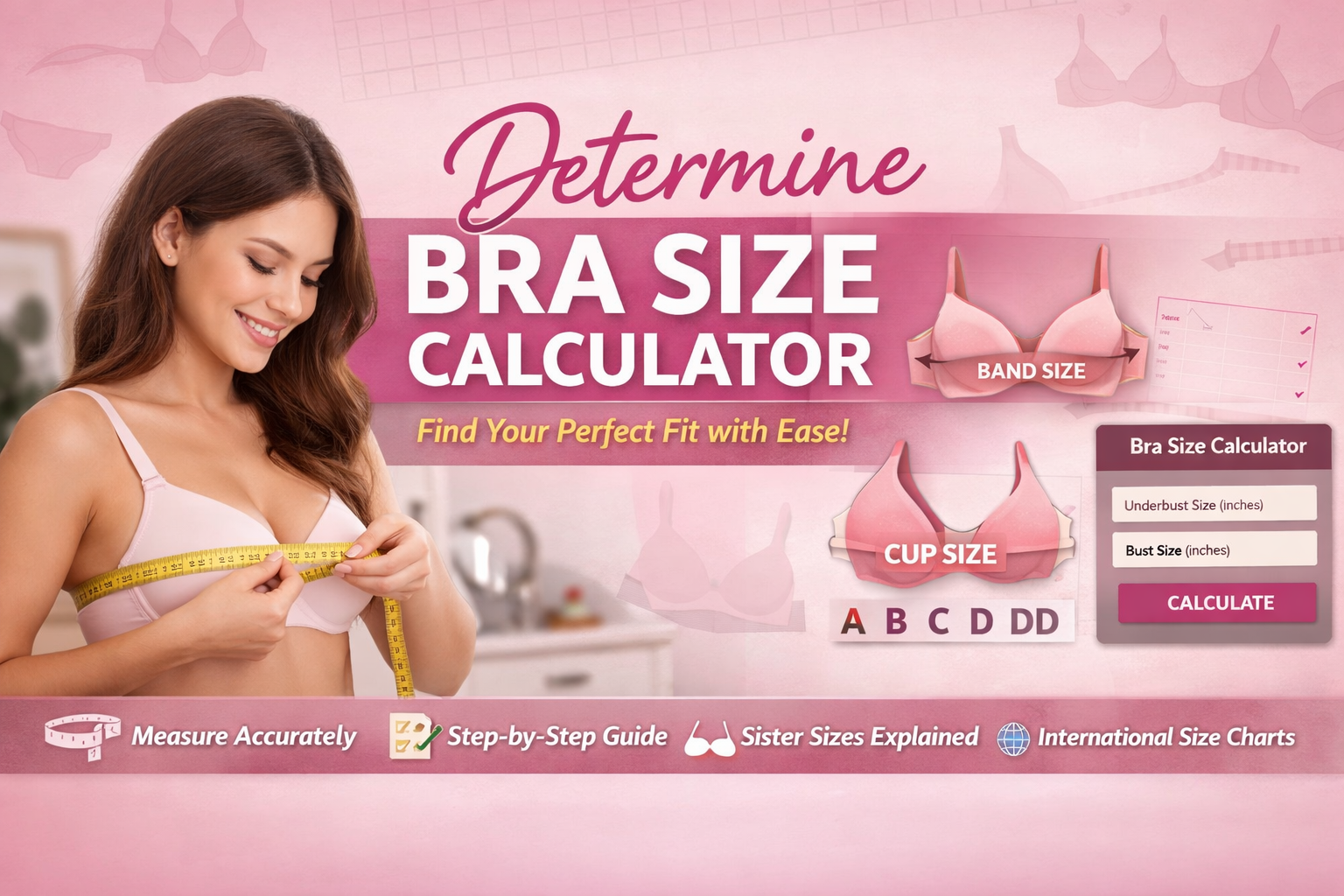
Finding the correct bra size is one of the most misunderstood yet essential aspects of women’s comfort, health, posture, and confidence. Despite millions of bras sold every year, a large percentage of women still wear the wrong size, not because they are careless, but because bra sizing systems are confusing, inconsistent, and poorly explained.
1. What Is a Determining Bra Size Calculator?
A Determine Bra Size Calculator is a digital tool that estimates your correct bra size using body measurements, primarily:
- Underbust (band) measurement
- Bust (cup) measurement
Unlike outdated sizing charts or guess-based fittings, a calculator uses mathematical relationships between these measurements to suggest a size that balances:
- Support
- Comfort
- Shape
- Weight distribution
Modern calculators are especially helpful for:
- First-time bra wearers
- Online shopping
- Post-weight change
- Pregnancy or postpartum phases

2. Why Wearing the Correct Bra Size Matters
Wearing the wrong bra size is not just uncomfortable, it can cause long-term physical issues.
Health & Comfort Impacts
- Shoulder pain from tight straps
- Neck and upper-back strain
- Poor posture
- Skin irritation or rashes
- Restricted breathing
Appearance & Confidence
- Poor clothing fit
- Sagging or flattened appearance
- Visible bra lines or overflow
Psychological Impact
Comfortable undergarments can significantly impact confidence, posture, and body awareness, particularly for teenagers and working women.
A properly sized bra distributes weight through the band, not the shoulders. This is why accurate sizing matters.
3. Common Bra Sizing Myths (That Cause Wrong Fits)
❌ Myth 1: “Cup Size Is the Same for Everyone.”
A D cup is not universal. A 32D and 38D are completely different in volume.
❌ Myth 2: “Your Size Never Changes.”
Weight changes, hormonal cycles, pregnancy, and aging all affect breast volume.
❌ Myth 3: “Tight Means Support.”
Support comes from the band fit, not tight straps.
❌ Myth 4: “Store Fittings Are Always Correct.”
Many fittings prioritize stock availability, not anatomical accuracy.
A bra size calculator removes bias and relies on measurement logic.
4. Understanding Bra Size Anatomy (Band + Cup)


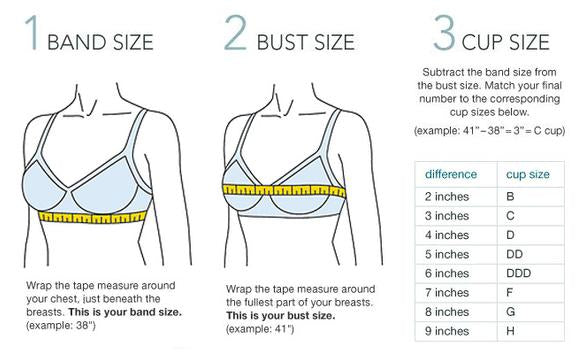
A bra size has two components:
1️⃣ Band Size (Number)
- Measured around the ribcage, just under the bust
- Common sizes: 28, 30, 32, 34, 36, 38, 40+
2️⃣ Cup Size (Letter)
- Calculated from the difference between bust and underbust
- Example:
- 1 inch → A
- 2 inches → B
- 3 inches → C
- 4 inches → D
Cup size depends on band size, they are not independent.
5. How to Measure Bra Size at Home (Step-by-Step)
What You Need
- Soft measuring tape
- Non-padded bra (or no bra)
- Mirror
- Pen or notes app

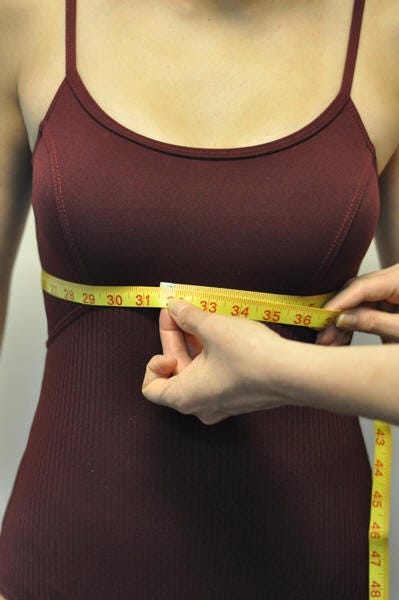
Step 1: Measure Underbust (Band)
- Stand straight, exhale normally
- Wrap tape snugly under your bust
- Keep tape parallel to the floor
📏 Round to the nearest whole number
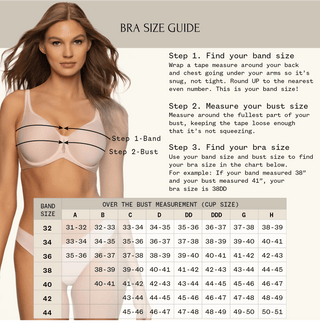
Step 2: Measure Bust
- Measure at the fullest part of the bust
- Tape should rest gently, not tight
- Keep shoulders relaxed
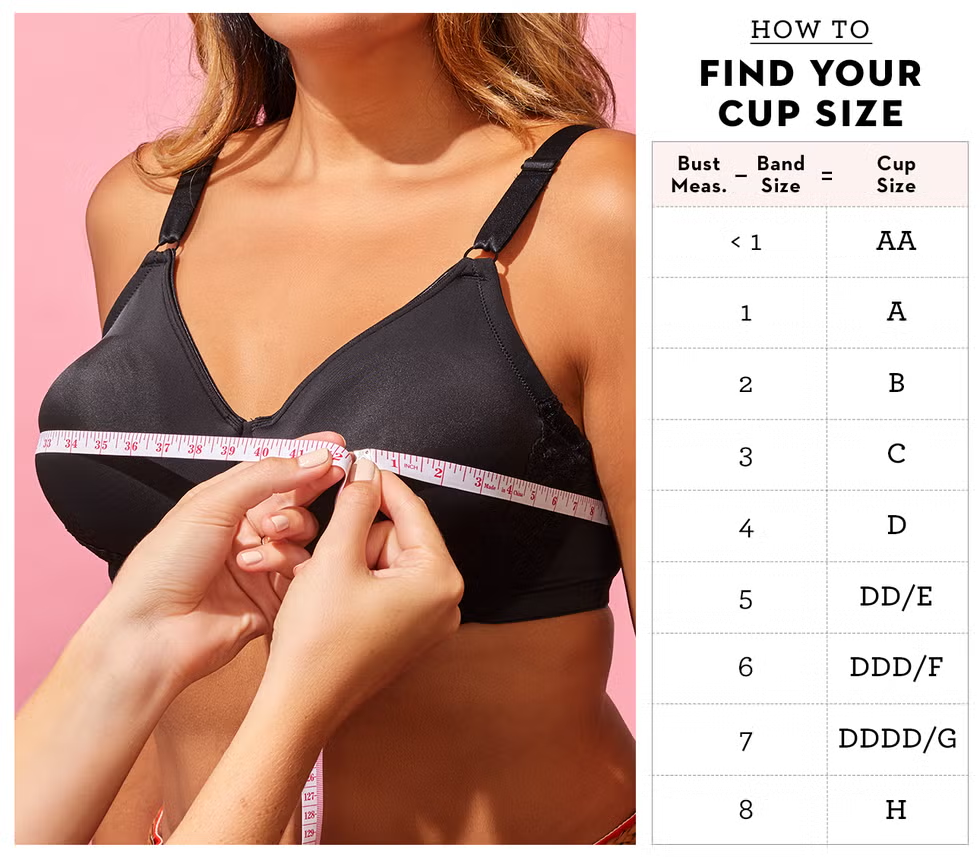
Step 3: Calculate Cup Size
Cup Size = Bust – Underbust
| Difference | Cup |
|---|---|
| 1 inch | A |
| 2 inches | B |
| 3 inches | C |
| 4 inches | D |
| 5 inches | DD / E |
Example
- Underbust: 32 inches
- Bust: 36 inches
➡ Bra Size: 32D
A bra size calculator automates this accurately.
6. How a Bra Size Calculator Works Internally
A reliable calculator follows these steps:
- Normalizes measurements (rounding rules)
- Maps underbust to band size
- Computes cup volume difference
- Applies regional sizing logic
- Suggests sister sizes
- Accounts for edge cases (small band + large cup)
Advanced calculators may also consider:
- Body frame
- Breast distribution
- Measurement tolerance
This is why calculators outperform static charts.
7. Sister Sizes Explained (Why Multiple Sizes Can Fit)
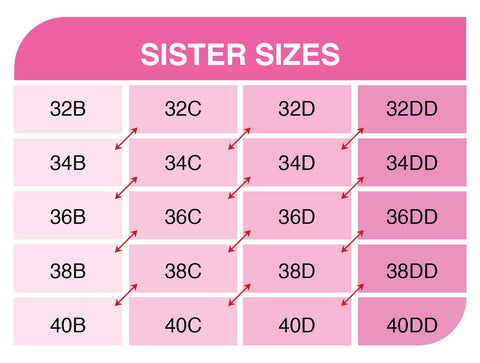
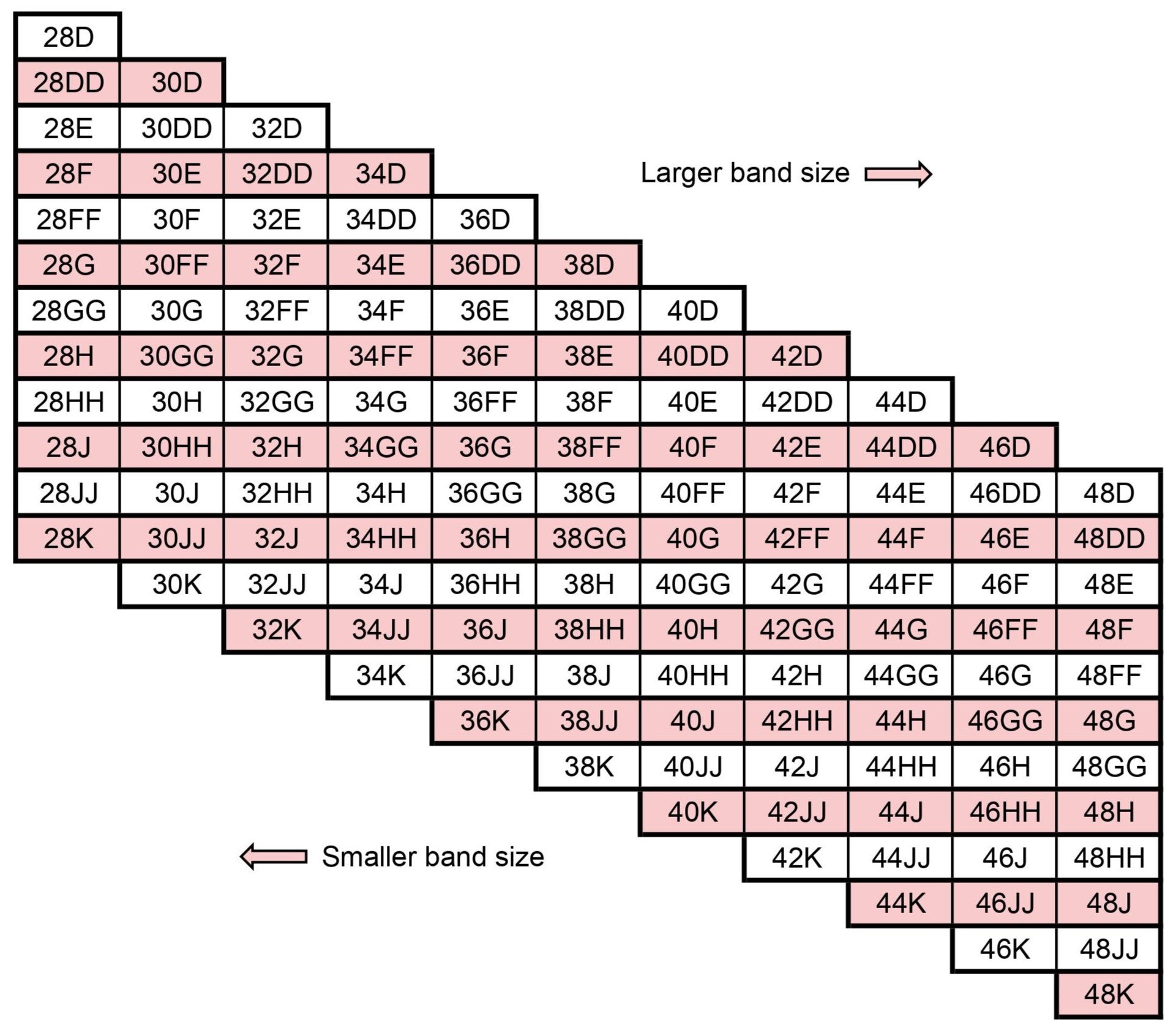

Sister sizes have the same cup volume but different band sizes.
Example: 34C Sister Sizes
- 32D
- 36B
Why this matters:
- If band feels tight → go up a band, down a cup
- If band feels loose → go down a band, up a cup
A good bra size calculator always provides sister sizes.
8. Age-Wise Bra Sizing Considerations (16–50)
Ages 16–20
- Growth still ongoing
- Measure every 6–12 months
- Avoid tight bands
Ages 21–35
- Most stable sizing phase
- Changes with weight or workouts
Ages 36–45
- Hormonal shifts affect fullness
- Support becomes more important
Ages 46–50+
- Breast tissue softens
- Wider straps and full cups help
A calculator adapts better than memory-based sizing.
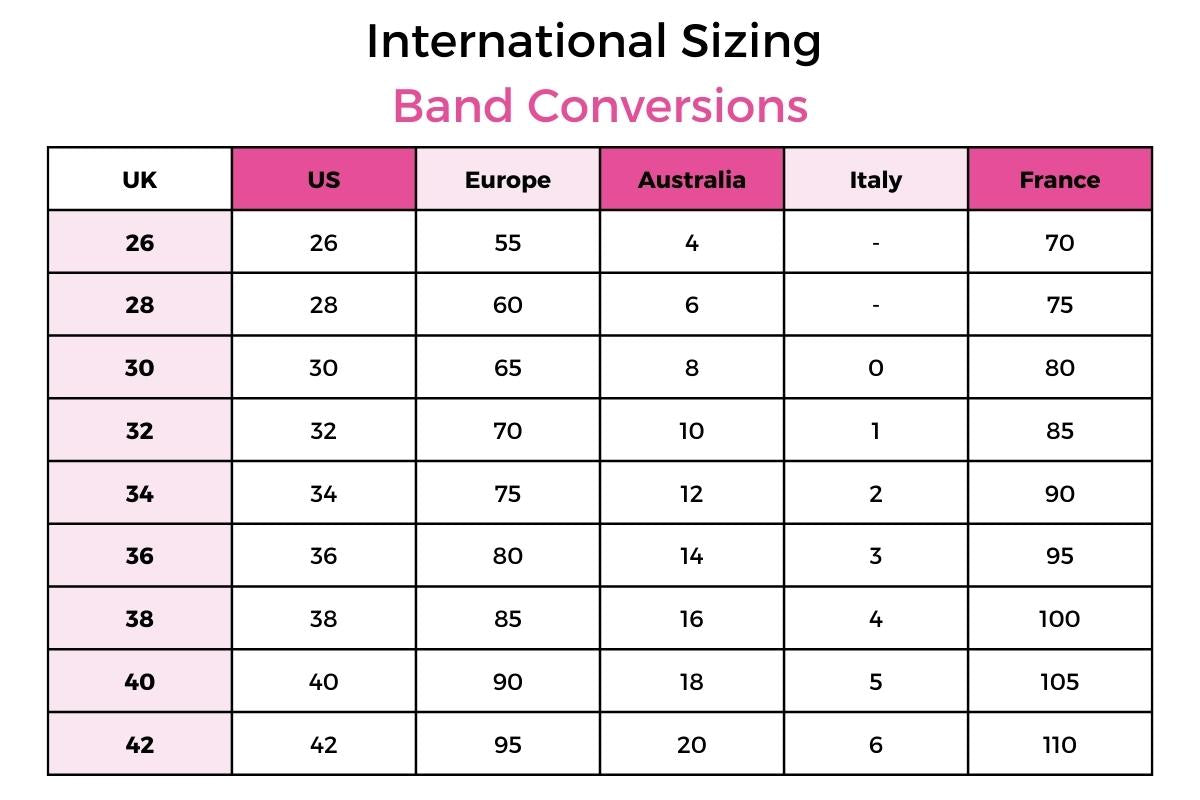
9. International Bra Size Conversion

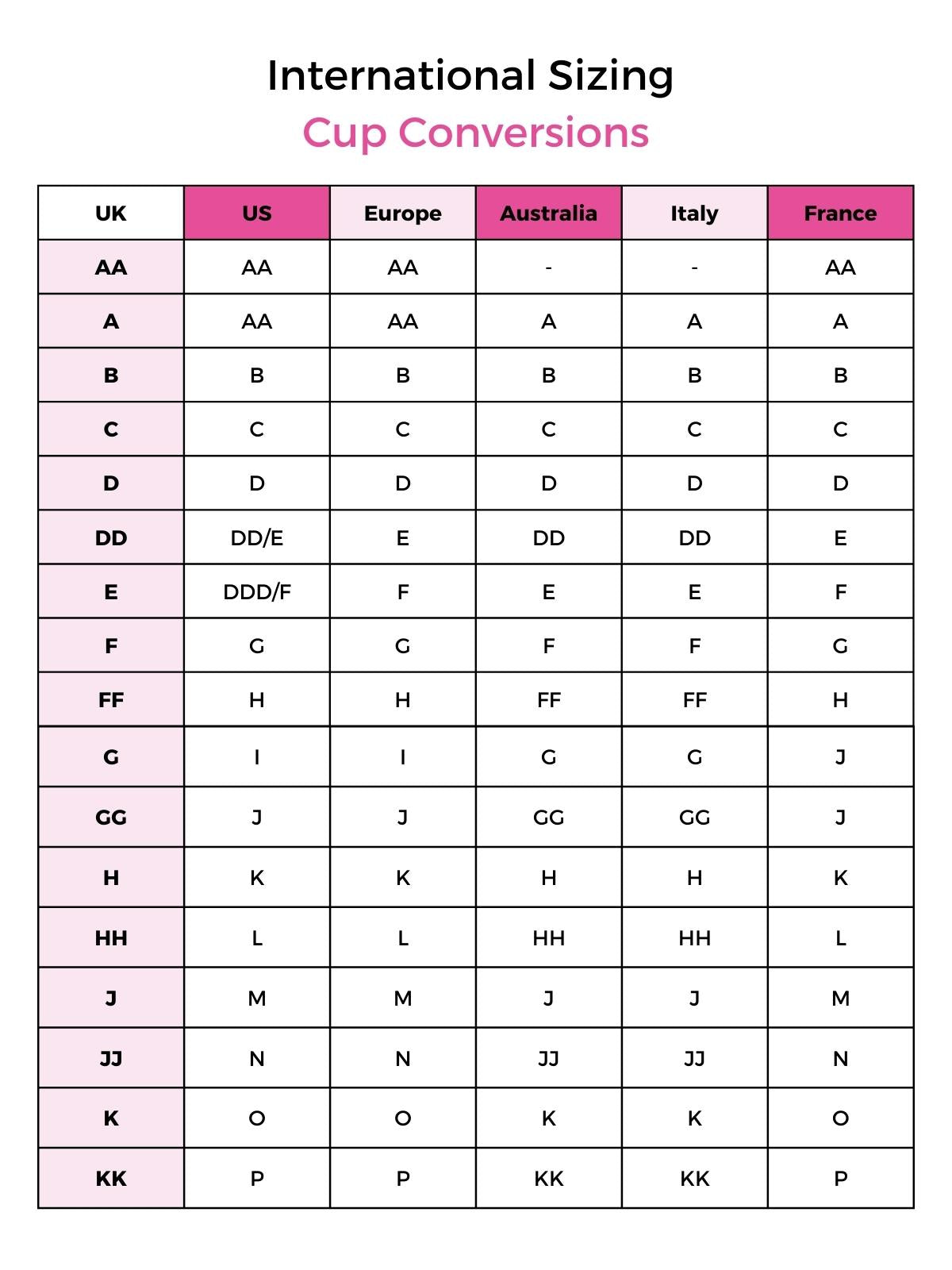

Different countries use different systems.
| US | UK | EU |
|---|---|---|
| 32D | 32D | 70D |
| 34C | 34C | 75C |
| 36DD | 36DD | 80E |
A smart bra size calculator automatically converts sizes for global shopping.
10. Signs Your Bra Size Is Wrong
🚩 Band Issues
- Rides up → too big
- Feels suffocating → too small
🚩 Cup Issues
- Spillage → cup too small
- Wrinkling → cup too large
🚩 Strap Issues
- Digging → band not supporting
- Slipping → wrong size or style
If you notice two or more, re-measure.
11. Bra Size Calculator vs In-Store Fitting
| Feature | Calculator | Store Fitting |
|---|---|---|
| Privacy | ✅ | ❌ |
| Bias-free | ✅ | ❌ |
| Anytime access | ✅ | ❌ |
| Stock-driven | ❌ | ✅ |
| Accuracy | High (if measured well) | Variable |
Best practice: Use a calculator first, then confirm with fit testing.
12. Final Thoughts: Comfort Is a Measurement, Not a Guess
A Determine Bra Size Calculator removes confusion, marketing bias, and guesswork from one of the most personal clothing decisions a woman makes.
Correct sizing means:
- Better posture
- Less pain
- Better clothing fit
- Greater confidence
Your body is not “difficult” it’s simply unique. Measurement respects that.
If you’re building or using a bra size calculator, prioritize clarity, education, and adaptability because sizing is not static, and neither are women.
13. FAQs
❓ How often should I measure?
Every 6–12 months or after weight/hormonal changes.
❓ Should I measure with a bra on?
Use a non-padded bra or none.
❓ Are online calculators reliable?
Yes, if they explain measurements clearly and show sister sizes.
❓ Is DD the largest size?
No. Cup sizes continue (E, F, G…) depending on the system.