Your body is approximately 60% water. Your brain? Around 75%. Your blood? A staggering 90%. Every single cell, tissue, and organ in your body depends on water to function properly — yet most people walk around chronically under-hydrated without even realizing it.
The question “how much water should I drink a day?” sounds simple enough. But the answer is far more nuanced than the widely quoted “eight glasses a day” rule suggests. Your ideal daily water intake depends on your body weight, age, activity level, climate, health status, and even what you eat.
This guide will give you everything you need: the science behind hydration, a clear formula to calculate your personal requirement, a practical drinking schedule, recommended intake by age and gender, and a comprehensive breakdown of what proper hydration actually does for your body.
Ready to stop guessing and start hydrating with precision? Use our free Water Intake Calculator and get your personalized recommendation in seconds — or keep reading for the complete guide.
Why Water Matters: The Science of Hydration
Water isn’t just something you drink when you’re thirsty. It’s the most essential nutrient your body needs — involved in virtually every biological process that keeps you alive.
Here’s what water does inside your body every single day:
- Regulates body temperature through sweating and respiration
- Transports nutrients and oxygen to every cell via the bloodstream
- Lubricates joints and cushions vital organs including the brain and spinal cord
- Aids digestion by breaking down food and moving it through the intestinal tract
- Flushes waste and toxins through urine, sweat, and bowel movements
- Maintains blood pressure by keeping blood volume at optimal levels
- Supports kidney function and prevents kidney stone formation
- Protects sensitive tissues including the eyes, nose, and mouth
- Enables chemical reactions that produce energy at the cellular level
- Maintains electrolyte balance critical for nerve and muscle function
When you don’t drink enough water, every one of these processes suffers. The result is a cascade of symptoms — from mild fatigue and headaches to serious complications like kidney damage, heat stroke, and seizures.
How Much Water Should You Drink a Day? The Real Answer
The “eight glasses a day” rule has been repeated so often that most people accept it as scientific fact. In reality, it’s a simplified guideline that doesn’t account for individual differences. Here’s what the actual science says.
Official Recommendations
Several major health organizations have published daily fluid intake guidelines based on extensive research:
| Organization | Men (Daily Total Fluid) | Women (Daily Total Fluid) |
|---|---|---|
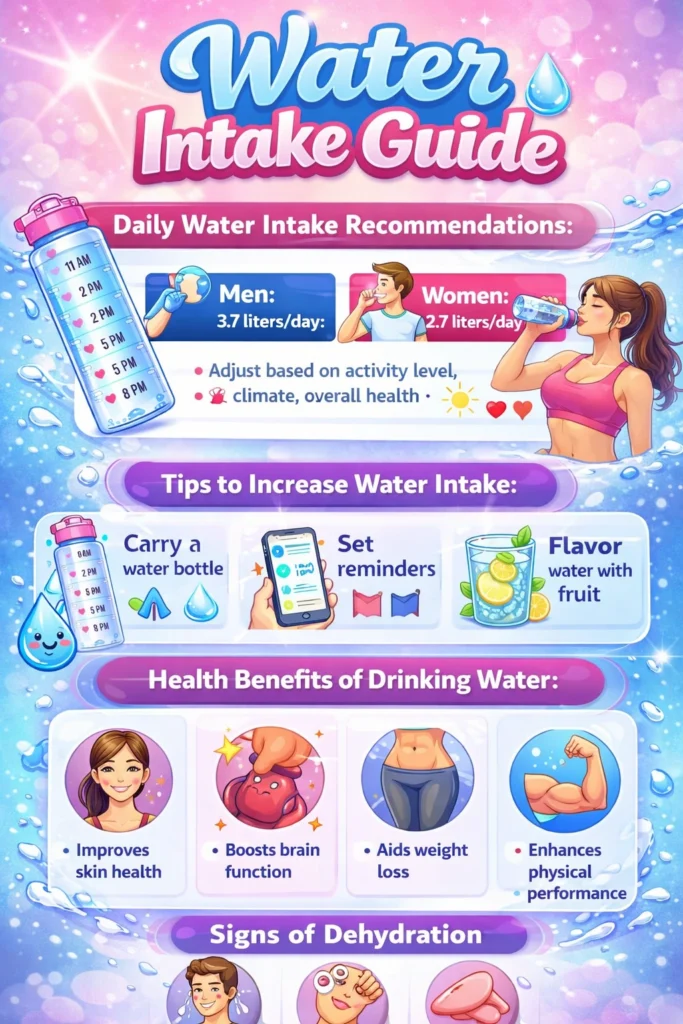
| U.S. National Academies of Sciences | 15.5 cups (3.7 litres) | 11.5 cups (2.7 litres) |
| Institute of Medicine (IOM) | 13 cups (3.0 litres) | 9 cups (2.2 litres) |
| European Food Safety Authority | 10 cups (2.5 litres) | 8 cups (2.0 litres) |
| U.K. National Health Service (NHS) | 6–8 glasses (~1.2 litres) | 6–8 glasses (~1.2 litres) |
Important: These numbers represent total fluid intake — meaning water from all sources, including other beverages and food. Roughly 20% of your daily water intake typically comes from the food you eat, particularly fruits and vegetables.
So when the National Academies recommend 3.7 litres for men, that translates to approximately 13 cups (3 litres) from beverages alone — and the remaining 0.7 litres from food.
The Body Weight Formula: Calculate Your Personal Intake
For a more personalized estimate, use this widely-recognized formula:
Your weight (in kg) × 30–35 ml = Daily water intake (in ml)
Or in imperial units:
Your weight (in pounds) ÷ 2 = Daily water intake (in ounces)
Example Calculations
| Body Weight | Formula | Daily Water Intake |
|---|---|---|
| 50 kg (110 lbs) | 50 × 35 = 1,750 ml | ~1.75 litres (7.5 cups) |
| 65 kg (143 lbs) | 65 × 35 = 2,275 ml | ~2.3 litres (9.5 cups) |
| 80 kg (176 lbs) | 80 × 35 = 2,800 ml | ~2.8 litres (12 cups) |
| 95 kg (209 lbs) | 95 × 35 = 3,325 ml | ~3.3 litres (14 cups) |
This baseline must then be adjusted for activity level, climate, and health factors.
Want an instant, personalized calculation? Try our Water Intake Calculator — simply enter your weight, activity level, and climate to get your exact daily recommendation.
Adjustments You Need to Make
Your baseline water requirement changes significantly based on these variables:
Activity Level Adjustments
| Activity Level | Additional Water Needed |
|---|---|
| Sedentary (desk job, minimal movement) | No additional needed beyond baseline |
| Light activity (walking, 1–3 workouts/week) | +300 ml (1.3 cups) |
| Moderate activity (3–5 workouts/week) | +500 ml (2 cups) |
| Active (daily intense exercise) | +700 ml (3 cups) |
| Very active (athlete-level training) | +1,000 ml (4+ cups) |
During exercise specifically, aim to drink 150–250 ml (5–8 oz) every 15–20 minutes of activity to replace fluid lost through sweat.
Climate Adjustments
| Climate Condition | Adjustment |
|---|---|
| Temperate climate (15–25°C / 59–77°F) | No adjustment needed |
| Hot climate (above 30°C / 86°F) | +25–40% of baseline |
| Very hot climate (above 40°C / 104°F) | +50–75% of baseline |
| Cold climate (below 5°C / 41°F) | Slight reduction (~200 ml less), but still drink consistently |
| High altitude (above 2,500 metres) | +20% of baseline |
| Low humidity (below 30%) | +10–15% of baseline |
Health-Related Adjustments
- Fever, vomiting, or diarrhea — increase intake significantly to replace lost fluids and electrolytes
- Urinary tract infections or kidney stones — extra water helps flush bacteria and prevent crystal formation
- Heart failure or kidney disease — may require restricting water intake under medical guidance
- Medications (esp. diuretics) — may increase fluid loss, requiring higher intake
Recommended Water Intake by Age: A Complete Breakdown
Hydration needs change dramatically across the lifespan. Children have higher water demands relative to their body weight, while older adults face a diminished thirst response that puts them at elevated risk for dehydration.
Infants (0–12 Months)
| Age | Recommended Fluid |
|---|---|
| 0–6 months | Breast milk or formula only — no supplemental water needed |
| 6–12 months | 120–240 ml (4–8 oz) of water daily, alongside breast milk/formula |
Supplemental water before 6 months can interfere with nutrient absorption from milk and fill the baby’s small stomach, reducing their caloric intake.
Children and Teenagers
| Age Group | Daily Fluid Recommendation |
|---|---|
| 1–3 years | 4 cups (~1 litre) |
| 4–8 years | 5 cups (~1.2 litres) |
| 9–13 years (boys) | 7–8 cups (~1.7 litres) |
| 9–13 years (girls) | 7 cups (~1.5 litres) |
| 14–18 years (boys) | 8–11 cups (~2.6 litres) |
| 14–18 years (girls) | 8 cups (~2 litres) |
Children who are physically active, playing outdoors in warm weather, or going through growth spurts may need significantly more than these minimums.
Adults (19–50 Years)
| Gender | Daily Total Fluid | From Beverages Alone |
|---|---|---|
| Men | 3.7 litres (15.5 cups) | ~3.0 litres (13 cups) |
| Women | 2.7 litres (11.5 cups) | ~2.2 litres (9 cups) |
How Much Water Should a Woman Drink a Day?
Women’s hydration needs deserve specific attention because hormonal fluctuations, reproductive health, and body composition all play a role:
- General recommendation: 2.0–2.7 litres (8–11 cups) of total fluids daily
- During menstruation: Increase by 1–2 extra cups due to fluid loss and hormonal shifts
- During pregnancy: 2.4–3.0 litres (10–12 cups) daily — the body’s blood volume increases 40–50%, and water supports amniotic fluid production and fetal circulation
- While breastfeeding: 3.0–3.8 litres (12–16 cups) daily — breast milk is approximately 87% water, and the body loses about 750 ml daily through milk production alone
A pregnant or breastfeeding woman should aim to drink a glass of water with every meal, every snack, and every feeding session. If morning sickness causes vomiting, fluid replacement becomes even more critical.
Explore more women-specific health guidance at our Women’s Health Calculators hub.
Older Adults (51+ Years)
| Gender | Daily Total Fluid |
|---|---|
| Men 51+ | 3.0 litres (13 cups) |
| Women 51+ | 2.2 litres (9 cups) |
Older adults face unique hydration challenges:
- Reduced thirst sensation — the body’s thirst mechanism weakens with age, meaning you may not feel thirsty even when significantly dehydrated
- Decreased kidney efficiency — aging kidneys are less effective at concentrating urine, leading to greater fluid loss
- Medication effects — many common medications (blood pressure drugs, diuretics, laxatives) increase fluid loss
- Reduced total body water — the body’s water content decreases from ~60% to ~50% with age, leaving less margin for error
Practical tip for seniors: Don’t wait until you feel thirsty. Set a timer to drink at regular intervals, and keep a water bottle visible throughout the day.
The Ideal Water Drinking Schedule: When to Drink Throughout the Day
Drinking the right amount of water is important — but when you drink it matters too. Spreading your water intake evenly throughout the day ensures steady hydration, better digestion, and sustained energy levels.
A Practical Daily Water Drinking Schedule
Here’s a science-backed schedule for optimal hydration (based on a ~2.5 litre / 10 cup daily target):
| Time | Action | Amount | Why It Helps |
|---|---|---|---|
| 6:00–7:00 AM | Drink upon waking | 1–2 glasses (250–500 ml) | Rehydrates after 6–8 hours of sleep; activates internal organs and metabolism |
| 8:00 AM | Before breakfast | 1 glass (250 ml) | Prepares digestive system; may improve nutrient absorption |
| 10:00 AM | Mid-morning | 1 glass (250 ml) | Maintains focus and energy during peak working hours |
| 12:00 PM | Before lunch | 1 glass (250 ml) | Aids digestion; helps prevent overeating by creating a feeling of fullness |
| 2:00 PM | Early afternoon | 1 glass (250 ml) | Combats the post-lunch energy dip; reduces fatigue |
| 4:00 PM | Mid-afternoon | 1 glass (250 ml) | Sustains concentration; prevents late-day dehydration headaches |
| 6:00 PM | Before dinner | 1 glass (250 ml) | Supports evening digestion without overloading the stomach |
| 8:00 PM | After dinner | 1 glass (250 ml) | Aids digestion and nutrient transport; avoid drinking too much close to bedtime to prevent sleep disruption |
| 9:00 PM | Before bed | ½ glass (125 ml) | Maintains hydration overnight without causing excessive nighttime urination |
Key Timing Tips
- Drink 30 minutes before meals, not during — this avoids diluting stomach acid and digestive enzymes
- Wait 1 hour after meals before drinking large amounts, allowing proper digestion
- Hydrate before, during, and after exercise: 500 ml 2 hours before → 150–250 ml every 15 minutes during → 500 ml after
- Don’t gulp large volumes at once — sipping steadily throughout the day allows your body to absorb water more efficiently
- If you wake during the night, a small sip is fine but avoid full glasses that disrupt sleep
How to Drink Water Correctly in a Day: 12 Evidence-Based Tips
Most people focus on how much water to drink but overlook how to drink it properly. These techniques, drawn from both scientific research and traditional wellness practices (including Ayurvedic principles), can significantly improve how your body absorbs and uses water.
1. Start Every Morning With Water Before Anything Else
Drink 1–2 glasses of room-temperature water within the first 15 minutes of waking. Your body loses approximately 500–1,000 ml of water overnight through breathing, sweating, and morning urination. Replenishing first thing kickstarts your metabolism and flushes accumulated toxins.
2. Sip, Don’t Gulp
Small, consistent sips throughout the day lead to significantly better absorption than drinking large volumes at once. Your kidneys can process approximately 800 ml to 1 litre per hour. Exceeding this rate means the excess water passes through your system without being properly utilized.
3. Drink Room Temperature or Warm Water
Both scientific and traditional Ayurvedic perspectives suggest that room-temperature or warm water is absorbed more efficiently than ice-cold water. Cold water can constrict blood vessels in the stomach lining, potentially slowing digestion and reducing the efficiency of nutrient absorption. Warm water helps relax the digestive tract and may improve blood circulation.
4. Drink While Sitting, Not Standing
This traditional wellness practice has a practical basis: when you sit down to drink, your muscles and nervous system are more relaxed, allowing your body to process and distribute water more efficiently. Drinking while standing or walking can cause water to flow too quickly through the system, reducing absorption.
5. Don’t Drink Large Amounts During Meals
Sipping small amounts of water during meals is fine and can aid swallowing and digestion. However, consuming large volumes of water while eating may dilute stomach acid and digestive enzymes, potentially slowing the breakdown of food. The ideal approach: drink most of your water 30 minutes before or 1 hour after meals.
6. Eat Your Water Too
About 20% of your daily water intake naturally comes from food. Prioritize water-rich fruits and vegetables:
| Food | Water Content |
|---|---|
| Cucumber | 96% |
| Lettuce (iceberg) | 96% |
| Celery | 95% |
| Radishes | 95% |
| Tomatoes | 94% |
| Watermelon | 92% |
| Strawberries | 91% |
| Cantaloupe | 90% |
| Peaches | 89% |
| Oranges | 87% |
7. Add Natural Flavour If Plain Water Bores You
If you struggle to drink plain water, infuse it with natural ingredients instead of reaching for sugary drinks:
- Lemon or lime slices
- Cucumber and mint
- Fresh ginger
- Berries (strawberries, blueberries, raspberries)
- Orange slices with cinnamon
These additions make water more palatable without adding significant calories or sugar.
8. Carry a Reusable Water Bottle Everywhere
The single most effective hydration habit is keeping water physically accessible at all times. Choose a bottle you enjoy using — marked with time goals if that helps — and refill it throughout the day.
9. Drink Before You Feel Thirsty
By the time you feel thirsty, your body is already mildly dehydrated — typically 1–2% below optimal hydration. Use the schedule above and drink proactively rather than reactively.
10. Monitor Your Urine Colour
Your urine is the most reliable real-time indicator of hydration:
- Pale straw / light yellow = well hydrated
- Dark yellow = mildly dehydrated, drink more
- Amber or honey-coloured = significantly dehydrated, increase intake immediately
- Clear / colourless = potentially over-hydrated (not necessarily harmful, but indicates you can ease off slightly)
11. Set Reminders If You Forget
Use your phone, a smartwatch, or a hydration tracking app to set hourly reminders. Many people intend to drink enough water but get absorbed in work or daily activities and forget entirely. Technology eliminates this problem.
12. Adjust for Coffee, Tea, and Alcohol
Caffeine and alcohol both have mild diuretic effects, meaning they increase urine production. For every cup of coffee, drink an additional half-cup of water. For every alcoholic drink, match it with a full glass of water.
100 Benefits of Drinking Water: What Proper Hydration Does for Your Body
Water affects every system, organ, and process in the human body. Here is a comprehensive breakdown organized by category.
Brain & Cognitive Function (1–15)
- Improves concentration and mental clarity
- Enhances short-term and working memory
- Reduces brain fog and mental fatigue
- Helps prevent headaches and migraines triggered by dehydration
- Supports neurotransmitter production and signalling
- Maintains the brain’s 75% water composition for optimal function
- Improves mood and emotional stability
- Reduces anxiety and irritability caused by dehydration
- Supports brain plasticity — the ability to learn and form new connections
- Helps remove metabolic waste products from brain tissue
- Enhances alertness and reaction time
- Reduces the risk of cognitive decline in older adults
- Supports healthy blood flow to the brain
- Helps maintain the blood-brain barrier
- Promotes better sleep quality, which in turn supports cognitive recovery
Physical Performance & Energy (16–30)
- Prevents exercise-induced fatigue
- Maintains muscle strength and endurance during workouts
- Lubricates joints, reducing friction and pain during movement
- Regulates body temperature during physical activity through sweat
- Speeds post-exercise recovery by flushing metabolic waste
- Reduces muscle cramps and spasms
- Improves flexibility and range of motion
- Supports oxygen delivery to working muscles
- Prevents dizziness and lightheadedness during exercise
- Helps maintain electrolyte balance during intense physical activity
- Reduces perceived exertion — making exercise feel less difficult
- Supports cardiovascular efficiency during sustained effort
- Prevents heat-related illness including heat stroke
- Sustains steady energy levels throughout the day
- Reduces afternoon energy crashes
Digestive Health (31–45)
- Breaks down food for easier digestion
- Prevents constipation by softening stools
- Supports healthy gut motility — the movement of food through the intestinal tract
- Aids nutrient absorption from food into the bloodstream
- Lubricates the digestive tract lining
- Helps dissolve soluble fibre, improving its digestive benefits
- Supports a healthy gut microbiome
- Reduces the risk of acid reflux and heartburn
- Prevents bloating caused by water retention (paradoxically, dehydration causes more bloating)
- Supports the production of saliva, the first step of digestion
- Helps maintain the pH balance of the stomach
- Reduces the risk of gastric ulcers
- Supports pancreatic function and enzyme production
- Aids the liver in processing and detoxifying substances
- Prevents the formation of gallstones
Skin, Hair & Appearance (46–60)
- Maintains skin elasticity and firmness
- Reduces the appearance of fine lines and wrinkles
- Flushes toxins that contribute to acne and skin breakouts
- Gives skin a natural, healthy glow
- Prevents dry, flaky, or cracked skin
- Supports collagen production — essential for skin structure
- Improves skin cell regeneration and healing
- Reduces under-eye puffiness and dark circles
- Helps regulate oil production, reducing excessively oily or dry skin
- Strengthens hair by hydrating the follicle from within
- Reduces hair breakage and split ends
- Supports nail strength and prevents brittle, cracking nails
- Promotes even skin tone and reduces redness
- Helps combat eczema and psoriasis flare-ups by maintaining skin moisture
- Makes the skin more resilient to environmental damage
Weight Management (61–72)
- Creates a feeling of fullness when consumed before meals, reducing calorie intake
- Boosts resting metabolic rate by up to 30% for 30–40 minutes after drinking
- Helps the body metabolize stored fat through a process called lipolysis
- Replaces high-calorie beverages when chosen over soda, juice, or sweetened coffee
- Reduces water retention and bloating — proper hydration signals the body to release stored water
- Improves workout performance, leading to greater calorie burn
- Reduces false hunger signals — thirst is frequently mistaken for hunger
- Supports the breakdown and elimination of food waste
- Helps maintain lean muscle mass during weight loss
- Enhances nutrient partitioning — directing nutrients toward muscle and away from fat storage
- Supports healthy thyroid function, which regulates metabolism
- Improves insulin sensitivity, helping regulate blood sugar levels
Kidney & Urinary Health (73–80)
- Helps prevent kidney stones by diluting mineral concentrations in urine
- Flushes bacteria from the urinary tract, reducing infection risk
- Supports kidney filtration — your kidneys filter approximately 180 litres of blood daily
- Reduces the recurrence of urinary tract infections (UTIs)
- Prevents dark, concentrated urine that indicates dehydration
- Supports the removal of urea and other waste products
- Helps maintain healthy urine flow and volume
- Reduces the risk of chronic kidney disease when maintained consistently
Heart & Cardiovascular Health (81–88)
- Maintains blood volume, ensuring efficient circulation
- Prevents blood from becoming thick and viscous, reducing the risk of clots
- Supports stable blood pressure
- Reduces strain on the heart by maintaining optimal blood viscosity
- Lowers the risk of coronary heart disease events in well-hydrated individuals
- Supports healthy cholesterol and triglyceride levels
- Improves oxygen delivery throughout the cardiovascular system
- Reduces the risk of stroke associated with severe dehydration
Immune System & Disease Prevention (89–95)
- Supports lymphatic system function — the body’s immune highway
- Helps transport white blood cells and antibodies to infection sites
- Flushes pathogens and cellular waste through urine and sweat
- Maintains the moisture of mucous membranes in the nose and throat — the body’s first line of defence against airborne infections
- Supports the production of lymph fluid, which is 95% water
- Helps maintain a healthy body temperature, which supports immune function
- Reduces the duration and severity of common illnesses when properly hydrated
Mental Health & Wellbeing (96–100)
- Reduces symptoms of anxiety and panic — dehydration triggers cortisol (stress hormone) production
- Improves overall mood and emotional resilience
- Supports better sleep patterns, reducing insomnia related to dehydration
- Enhances feelings of vitality and life satisfaction
- Promotes a sense of calm and relaxation when consumed mindfully through the day
Signs You’re Not Drinking Enough Water (Dehydration Symptoms)
Recognizing dehydration early is crucial. Here are the warning signs, progressing from mild to severe:
Mild Dehydration (1–3% body weight loss)
- Thirst
- Dry mouth, lips, or tongue
- Slightly darker yellow urine
- Mild headache
- Reduced concentration
- Slight fatigue or sluggishness
Moderate Dehydration (3–5% body weight loss)
- Very dark yellow urine
- Noticeably decreased urine frequency
- Dry, cool skin
- Muscle cramps
- Dizziness or lightheadedness
- Increased heart rate
- Irritability and confusion
Severe Dehydration (5%+ body weight loss) — Seek Medical Help
- Extreme thirst
- Little or no urination
- Very dark amber or brown urine
- Sunken eyes
- Rapid heartbeat and breathing
- Fainting or loss of consciousness
- Seizures
- Delirium
Children and older adults are at the highest risk for severe dehydration because their thirst mechanisms are less reliable. Monitor water intake proactively for these groups.
Can You Drink Too Much Water? Understanding Overhydration
While rare, drinking excessive amounts of water too quickly can be dangerous. The condition is called water intoxication or hyponatremia — a potentially fatal drop in blood sodium levels.
How It Happens
Your kidneys can process roughly 800 ml to 1 litre of water per hour. Consuming significantly more than this rate overwhelms the kidneys, diluting sodium in the blood and causing cells to swell — including brain cells.
Who’s at Risk?
- Endurance athletes (marathon runners, triathletes) who over-hydrate during events
- People with certain medical conditions (kidney disease, heart failure, SIADH)
- Participants in water-drinking contests
- Individuals taking diuretic medications
Symptoms of Water Intoxication
- Nausea and vomiting
- Headache
- Confusion and disorientation
- Muscle weakness or cramping
- Seizures (in severe cases)
- Loss of consciousness
How to Avoid It
- Never drink more than 1 litre per hour over an extended period
- During endurance exercise, include electrolyte drinks rather than water alone
- Listen to your body — if you feel bloated or nauseous, stop drinking
- If urine is completely colourless for extended periods, reduce your intake slightly
Water-Rich Foods: Hydrate Through Your Diet
Remember, approximately 20% of your daily water intake comes from food. Here are the top hydrating foods organized by category:
Top Hydrating Vegetables
| Vegetable | Water Content |
|---|---|
| Cucumber | 96% |
| Lettuce (iceberg) | 96% |
| Celery | 95% |
| Radishes | 95% |
| Zucchini | 95% |
| Tomatoes | 94% |
| Bell peppers (green) | 94% |
| Asparagus | 93% |
| Mushrooms (portobello) | 93% |
| Cabbage | 93% |
| Spinach | 91% |
| Cauliflower | 92% |
| Broccoli | 91% |
Top Hydrating Fruits
| Fruit | Water Content |
|---|---|
| Watermelon | 92% |
| Strawberries | 91% |
| Grapefruit | 91% |
| Cantaloupe | 90% |
| Peaches | 89% |
| Oranges | 87% |
| Pineapple | 87% |
| Apples | 84% |
| Pears | 84% |
| Kiwi | 83% |
Including a generous amount of these foods in your daily diet contributes meaningfully to hydration — plus delivers vitamins, minerals, fibre, and antioxidants that plain water doesn’t provide.
Other Beverages That Count Toward Your Water Intake
Water is the gold standard for hydration, but other beverages contribute to your daily fluid total:
| Beverage | Hydration Value | Notes |
|---|---|---|
| Herbal tea | Excellent | Caffeine-free, counts fully toward water intake |
| Green / black tea | Good | Mild diuretic effect, but net hydration is still positive |
| Coffee | Good (in moderation) | Up to 3–4 cups/day contributes to hydration despite mild diuretic effect |
| Milk | Excellent | Contains water, electrolytes, protein; studies show superior hydration vs. water in some contexts |
| Coconut water | Excellent | Natural electrolytes; ideal for post-workout recovery |
| Fruit juice (100%) | Moderate | Hydrating but high in sugar; limit to small portions |
| Sparkling water | Excellent | Equally hydrating as still water |
| Sports drinks | Situational | Useful during intense exercise lasting 60+ minutes; unnecessary for daily hydration |
| Soda | Poor | High sugar content outweighs hydration benefit |
| Alcohol | Negative | Dehydrating due to diuretic effect; always pair with water |
Pythagorean Water Intake Formula: A Quick Reference
Here’s a simplified calculation you can use right now — no calculator needed:
Step 1: Find Your Base Intake
Body weight (kg) × 33 ml = Base daily water (ml)
Step 2: Add Exercise
+ 350 ml for every 30 minutes of exercise
Step 3: Adjust for Climate
- Hot weather: × 1.25 (add 25%)
- Very hot weather: × 1.5 (add 50%)
- High altitude: × 1.2 (add 20%)
Quick Example
A 70 kg woman who exercises moderately (45 minutes/day) in a warm climate:
- Base: 70 × 33 = 2,310 ml
- Exercise: +525 ml (45 min ÷ 30 × 350)
- Climate: × 1.25 = 3,544 ml
Daily recommendation: approximately 3.5 litres (15 cups)
For a more precise calculation customized to your exact profile, our Water Intake Calculator handles all the math for you.
Hydration Tips for Special Situations
For Athletes and Fitness Enthusiasts
- Drink 500 ml (2 cups) 2–3 hours before exercise
- Sip 150–250 ml (5–8 oz) every 15–20 minutes during exercise
- Drink 500–750 ml (2–3 cups) within 30 minutes of finishing
- For workouts lasting over 60 minutes, add electrolytes (sodium, potassium, magnesium)
- Weigh yourself before and after exercise — drink 1.5 litres for every kilogram lost
For People in Hot Climates
- Increase baseline intake by 25–50%
- Drink before going outdoors, not just when you arrive
- Freeze a partially-filled water bottle overnight and top it up in the morning for cold water throughout the day
- Eat more water-rich fruits (watermelon, cucumber, oranges)
- Avoid alcohol and excessive caffeine, which accelerate dehydration
For Office Workers
- Keep a water bottle on your desk and refill it at set intervals
- Drink a glass of water every time you take a break
- Use the “one glass per hour” rule during the workday (8 glasses across 8 hours)
- Set digital reminders on your phone or computer
- Replace afternoon soda or energy drinks with flavoured sparkling water
For Children
- Make water the default drink at every meal and snack
- Use colourful, fun water bottles to encourage drinking
- Model the behaviour — children imitate what adults do
- Offer water before, during, and after outdoor play
- Limit fruit juice to 125 ml per day for ages 1–6 and 250 ml for ages 7–18
Final Thoughts: Make Hydration a Daily Practice, Not an Afterthought
Water is the simplest, cheapest, and most effective health intervention available to every human being on the planet. You don’t need a prescription for it. You don’t need special equipment. You just need awareness and consistency.
The perfect amount of water for you isn’t a universal number — it’s a personal calculation based on who you are, how you live, and what your body demands on any given day. Use the formulas in this guide, pay attention to your body’s signals, and build hydration into your daily routine the way you build in brushing your teeth or eating meals.
Your body will reward you with clearer skin, sharper thinking, better digestion, stronger performance, and a resilience that most people simply leave on the table — all because they never learned to drink enough water.
Start today. Your cells are counting on it.
Tools to Help You Stay Hydrated
Calculating your perfect daily water intake manually works — but why not make it effortless? Explore our free health and wellness calculators:
- 💧 Water Intake Calculator — Get your personalized daily water recommendation based on weight, activity, and climate
- 🧮 All Calculators & Health Tools — Browse our complete collection of free health, fitness, and wellness calculators
- 🩺 Women’s Health Calculators — Specialized calculators designed for women’s unique health needs, from pregnancy hydration to body composition
Frequently Asked Questions (FAQ)
How many litres of water should I drink a day?
For most adults, the recommended daily water intake from beverages is approximately 2.0–3.0 litres (8–13 cups), depending on gender, body weight, and activity level. Men typically need around 3 litres, while women need about 2.2 litres. These figures represent fluids from beverages and don’t include the additional 0.5–0.7 litres typically obtained from food. Use our Water Intake Calculator for a personalized recommendation.
Is 4 litres of water a day too much?
For the average sedentary adult, 4 litres may be more than necessary. However, for larger individuals, athletes, pregnant or breastfeeding women, or those in hot climates, 4 litres can be perfectly appropriate and even required. The key is to spread your intake evenly throughout the day and listen to your body’s signals. If your urine is consistently clear and you’re urinating very frequently, you may want to reduce slightly.
Does coffee count as water intake?
Yes, coffee does contribute to your daily fluid intake. Despite caffeine’s mild diuretic effect, research consistently shows that the net hydration effect of moderate coffee consumption (3–4 cups/day) is positive. You don’t need to drink an equal amount of water to “offset” coffee, but it’s still wise to drink an extra half-cup of water per cup of coffee for optimal hydration.
How much water should a pregnant woman drink?
Pregnant women should aim for 2.4–3.0 litres (10–12 cups) of total fluids daily. This increased need supports expanded blood volume (which increases by 40–50% during pregnancy), amniotic fluid production, and fetal development. During breastfeeding, this increases further to 3.0–3.8 litres (12–16 cups) daily.
What’s the best time to drink water?
The most beneficial times to drink water include: immediately upon waking (to rehydrate after sleep), 30 minutes before each meal (to support digestion), during and after exercise (to replace sweat losses), and throughout the day at regular intervals. Avoid large quantities right before bed to prevent sleep disruption from nighttime bathroom trips.
Can drinking water help me lose weight?
Yes, multiple studies support water’s role in weight management. Drinking 500 ml (2 cups) of water before meals has been shown to reduce calorie intake by 75–90 calories per meal. Water also temporarily boosts metabolic rate by up to 30%, supports fat metabolism through lipolysis, and helps the body distinguish genuine hunger from thirst signals. However, water alone is not a substitute for a balanced diet and regular physical activity.
How do I know if I’m drinking enough water?
The simplest indicator is your urine colour. Pale straw or light yellow suggests adequate hydration. Dark yellow or amber indicates you need more water. Other signs of proper hydration include: consistent energy levels throughout the day, infrequent headaches, normal bowel movements, moist lips and mouth, and good skin elasticity. Conversely, persistent fatigue, dry skin, infrequent urination, and brain fog suggest dehydration.
Is it bad to drink water while eating?
Drinking moderate amounts of water during meals is generally fine and can actually aid digestion by helping break down food. The concern about “diluting digestive juices” is largely exaggerated — your stomach produces acid on demand, and a glass or two of water during a meal doesn’t meaningfully impair digestion. However, avoid gulping very large volumes during meals, and focus most of your water intake between meals.
How much water does a person lose per day?
An average sedentary adult loses approximately 2.5–3.0 litres of water per day through normal bodily processes: urination (~1.5 litres), breathing (~400 ml), sweating (~600 ml), and bowel movements (~200 ml). Active individuals, those in hot climates, or people who are ill may lose significantly more — sometimes 5–6 litres or more during intense exercise in hot conditions.
Are there risks to drinking very cold water?
While cold water is safe and still hydrating, some evidence suggests that very cold beverages may temporarily constrict blood vessels in the digestive tract, potentially slowing digestion slightly. Cold water can also trigger headaches in people prone to migraines. For most people, room-temperature or cool water is ideal, but cold water is fine — especially during hot weather or intense exercise when rapid cooling is beneficial.
How much water per day for a 70 kg man?
A 70 kg man should aim for approximately 2.3–2.5 litres (10–11 cups) of water from beverages daily, based on the formula of 33 ml per kilogram of body weight. This increases with physical activity, hot weather, or illness. The total fluid intake from all sources (beverages + food) would be approximately 3 litres.
What happens if you don’t drink enough water?
Chronic dehydration, even at mild levels, leads to reduced cognitive performance, persistent headaches, increased fatigue, poor skin health, constipation, and elevated risk of kidney stones and urinary tract infections. Severe dehydration can cause dangerously low blood pressure, rapid heartbeat, kidney failure, seizures, and in extreme cases, death. Even a 1–2% drop below optimal hydration measurably impairs brain function and physical performance.
Should I drink 3 litres of water a day?
For most adult men and larger or very active women, 3 litres of total daily fluid is within the recommended range. For smaller or more sedentary women, 2–2.5 litres from beverages may be sufficient. The right amount depends on your body weight, activity level, climate, and health status. Rather than targeting a fixed number, use a personalized calculation based on your weight and lifestyle.
Does sparkling water hydrate as well as still water?
Yes. Sparkling (carbonated) water is equally hydrating as still water. The carbon dioxide that creates the bubbles does not affect your body’s ability to absorb the water. The only consideration is that some people find carbonation causes mild bloating, which may make it harder to drink sufficient volumes. Choose unflavoured varieties without added sugar or sodium for the best hydration benefit.
Is warm water better than cold water in the morning?
Many health practitioners recommend warm or room-temperature water in the morning because it is believed to stimulate digestion more gently, improve blood circulation, and help the body flush overnight accumulations of waste. From a strict hydration perspective, both warm and cold water hydrate equally. However, warm water may be easier to drink in larger quantities first thing in the morning and is less likely to cause stomach discomfort.
How much water should you drink before bed?
A small glass (125–250 ml) of water about 1 hour before bedtime is generally recommended. This amount provides overnight hydration without causing excessive nighttime urination that disrupts sleep. Avoid drinking large volumes (500 ml+) right before lying down. If you frequently wake up thirsty, increase your water intake during the evening hours rather than immediately before sleep.
Can too much water damage your kidneys?
Healthy kidneys can handle large volumes of water without damage. However, consistently drinking far beyond your body’s needs forces the kidneys to work harder to excrete the excess, and in extreme cases, the rapid dilution of sodium can lead to hyponatremia, which can damage the brain before affecting the kidneys. People with existing kidney disease should follow their doctor’s specific fluid recommendations.
What is the 8×8 rule for water?
The “8×8 rule” refers to the popular guideline suggesting you drink eight 8-ounce glasses of water per day — totalling about 2 litres (64 ounces). While this serves as a simple, memorable starting point, it’s not based on rigorous scientific evidence and doesn’t account for individual differences in body weight, activity level, or climate. Most health authorities recommend higher amounts for men and adjustments based on personal factors